- Suite 1, Level 1, 117 Camberwell Road, Hawthorn East VIC 3123
- [email protected]

CYV-101 for LAM
A fusion protein that targets
key LAM biology
About CYV-101
- Home
- About CYV-101
Targeting the heart of LAM biology
CYV-101 has been designed to target one of the central biological pathways believed to contribute to the progression of LAM. Unlike the one currently approved therapy for LAM, which inhibits the mTOR pathway, CYV-101 is designed to interrupt signalling through the VEGF-C/VEGF-D–VEGFR-3 pathway, a complementary biological pathway involved in abnormal lymphatic remodelling, cellular migration and disease progression.
CYV-101 is a biologic engineered to bind simultaneously to both VEGF-C and VEGF-D, preventing them from activating their receptor, VEGFR-3. By interrupting this signalling pathway, CYV-101 is designed to reduce the abnormal biological communication between LAM cells and the lymphatic system that is believed to contribute to disease progression.
Because this mechanism targets a different biological driver of LAM from the current standard of care, CYV-101 has the potential to complement mTOR inhibition and, if supported by future clinical studies, could provide the basis for a disease-modifying therapeutic strategy rather than one that primarily suppresses disease activity. This differentiated biological approach forms the scientific foundation of Ceryvyn’s development programme.
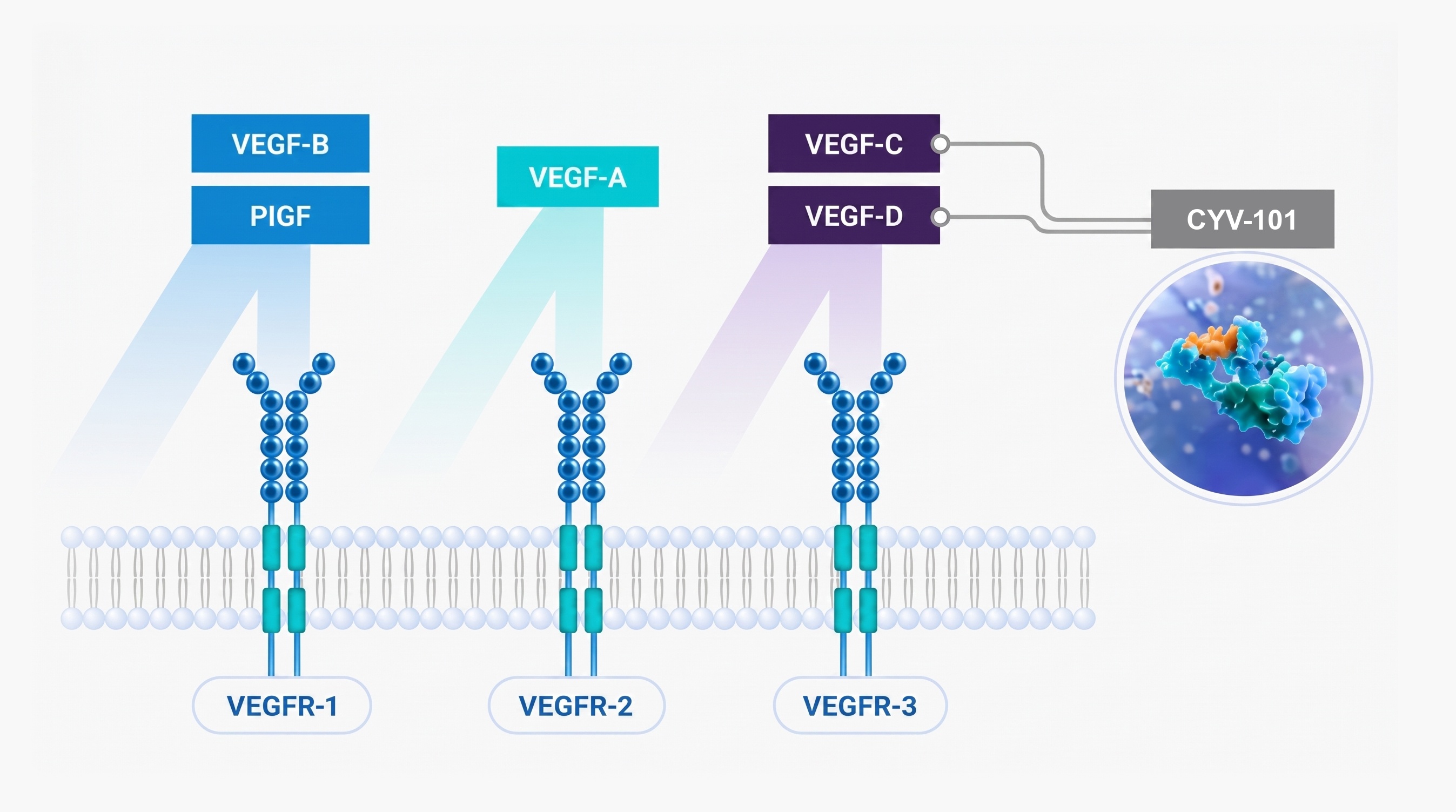

Includes parts of VEGFR-3 receptor to trap VEGF-C/D
Already administered to thousands of patients in prior indication
Also includes antibody fragment to increase half-life
Extensive intellectual property portfolio of patents (both issued and applied for)
A de-risked biological and development strategy
Unlike many early-stage biotechnology programmes, CYV-101 enters development for LAM with substantial scientific, clinical and manufacturing foundations already established.
The molecule has previously been evaluated in approximately 2,000 patients in late-stage ophthalmology clinical trials, generating an extensive body of clinical safety data. These studies were supported by advanced manufacturing, quality and regulatory development programmes, providing a level of product characterisation that is uncommon for therapies entering a new indication.
As a result, Ceryvyn’s development in LAM begins with a considerably more mature foundation than is typical for an early-stage rare disease programme. The biology of LAM further strengthens this position. LAM is driven by well-defined molecular pathways involving TSC1/TSC2, mTOR and the VEGF-C/VEGF-D–VEGFR-3 pathway. The disease also benefits from established diagnostic criteria, recognised specialist treatment centres and validated biomarkers such as VEGF-D, providing objective methods for patient selection and disease assessment.
Together, these factors create an opportunity for a focused and biologically informed clinical development programme.
Because LAM is a rare disease, CYV-101 may be eligible for Orphan Drug Designation (ODD), subject to regulatory review and sponsor application. Orphan designation may provide important regulatory and commercial advantages, including potential market exclusivity, fee reductions and other development incentives. Rare diseases may also support appropriately designed clinical development programmes involving smaller patient populations than would typically be required for more common diseases.
Taken together, prior clinical experience with CYV-101, an advanced manufacturing and regulatory foundation, a well-characterised disease biology, established biomarkers and the potential advantages associated with rare disease development create a differentiated and comparatively de-risked development strategy for LAM.
-
Get to know us
-
Talk to our team
-
Feel free to contact us!
Ceryvyn Therapeutics Limited
Ceryvyn Therapeutics Limited ABN 32 006 340 567.
An Australian biotechnology company (ASX: CYV) developing a biologic therapy for the rare disease LAM
(lymphangioleiomyomatosis).
Site Links
Contact Us
- Suite 1, Level 1, 117 Camberwell Road,
Hawthorn East VIC 3123
Subscribe to Updates
© 2026 Ceryvyn Therapeutics All rights reserved